



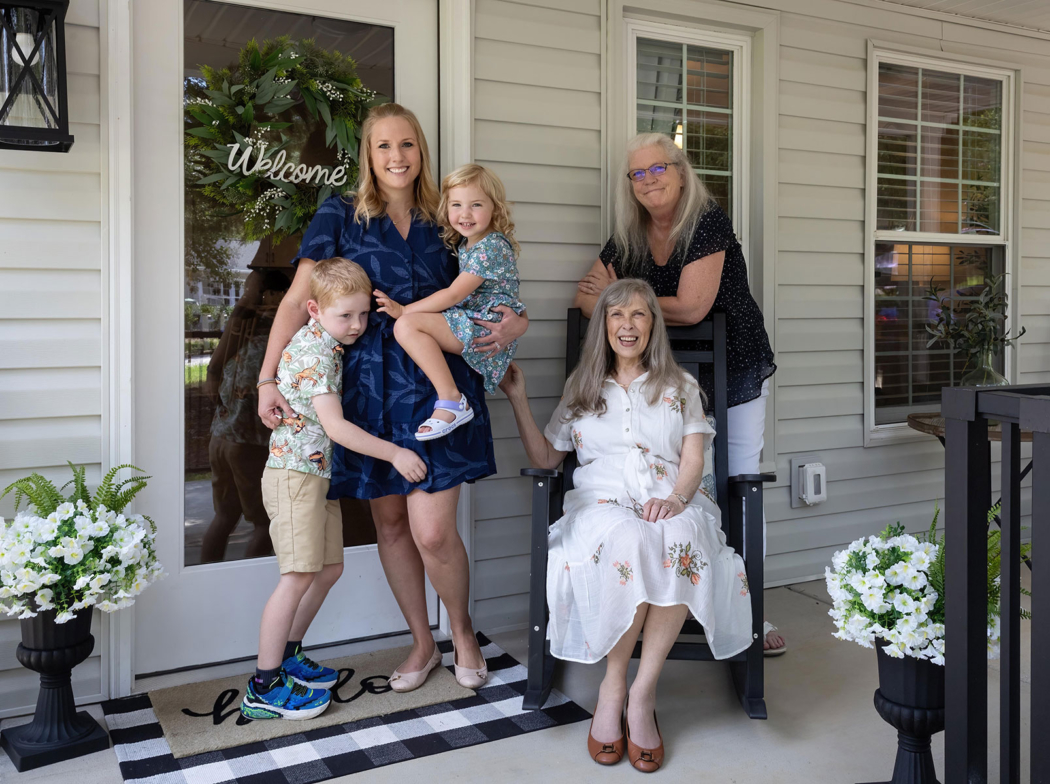
Melissa Rich found her father’s care home the way most families never do: by walking her dog past it every day, hearing it mentioned once at an HOA meeting she almost skipped, and then reverse-searching the address herself because she couldn’t find the name anywhere online.
“I literally stalked the house,” she says.
That house — a small, residential assisted living home tucked behind her own neighborhood — became Avendelle, the model that would eventually shape Avendelle at Picardy Point, the six-bedroom home Melissa is opening in Cary. But before she was an owner and operator, she was a daughter driving back and forth between her own house and her parents’ with two toddlers in the backseat, trying to keep her father safe, and discovering appointment by appointment, denial letter by denial letter, how little anyone tells families before the crisis hits.
The numbers explain why her story is becoming so common. In Cary, 15.5% of residents are now 65 or older, already above the Wake County average, and North Carolina’s senior population is projected to nearly double over the next 20 years. More families in their 40s and 50s are now caring for young kids and aging parents at the same time, often with no idea where to even start.
“It might not happen tomorrow,” she says, “but the silver tsunami is coming.”
Melissa’s father had a hemorrhagic stroke in 2013, out of nowhere, at 60. An electrical engineer with an MBA, a business owner, an Air Force veteran — the planner, the Boy Scout, the one who always had it together — he came back from the stroke cognitively intact enough that no one used the word dementia yet. He’d also caught shingles on his face during that hospital stay, pain Melissa describes as a 10 out of 10 every time he reported, and it permanently affected his vision.
Looking back, she isn’t sure the dementia had a clean start date at all and perhaps simply crept in over the years that followed. By early 2025, it had accelerated into something else entirely: agitation, paranoia, a conviction that the neighbors doing yard work were actually running a cult. Melissa would get calls from her mother mid-workday because her father was outside yelling at neighbors, refusing to come inside, refusing to be reasoned with. More than once, Melissa huddled with her two young kids in a hallway while her father, a man she calls the most amazing person she’s ever known, spiraled in the next room
“It’s like a modern-day zombie,” she says of watching dementia take her father. “Your dad looks like your dad. There’s still things about them that are the same, but they’re not there.”
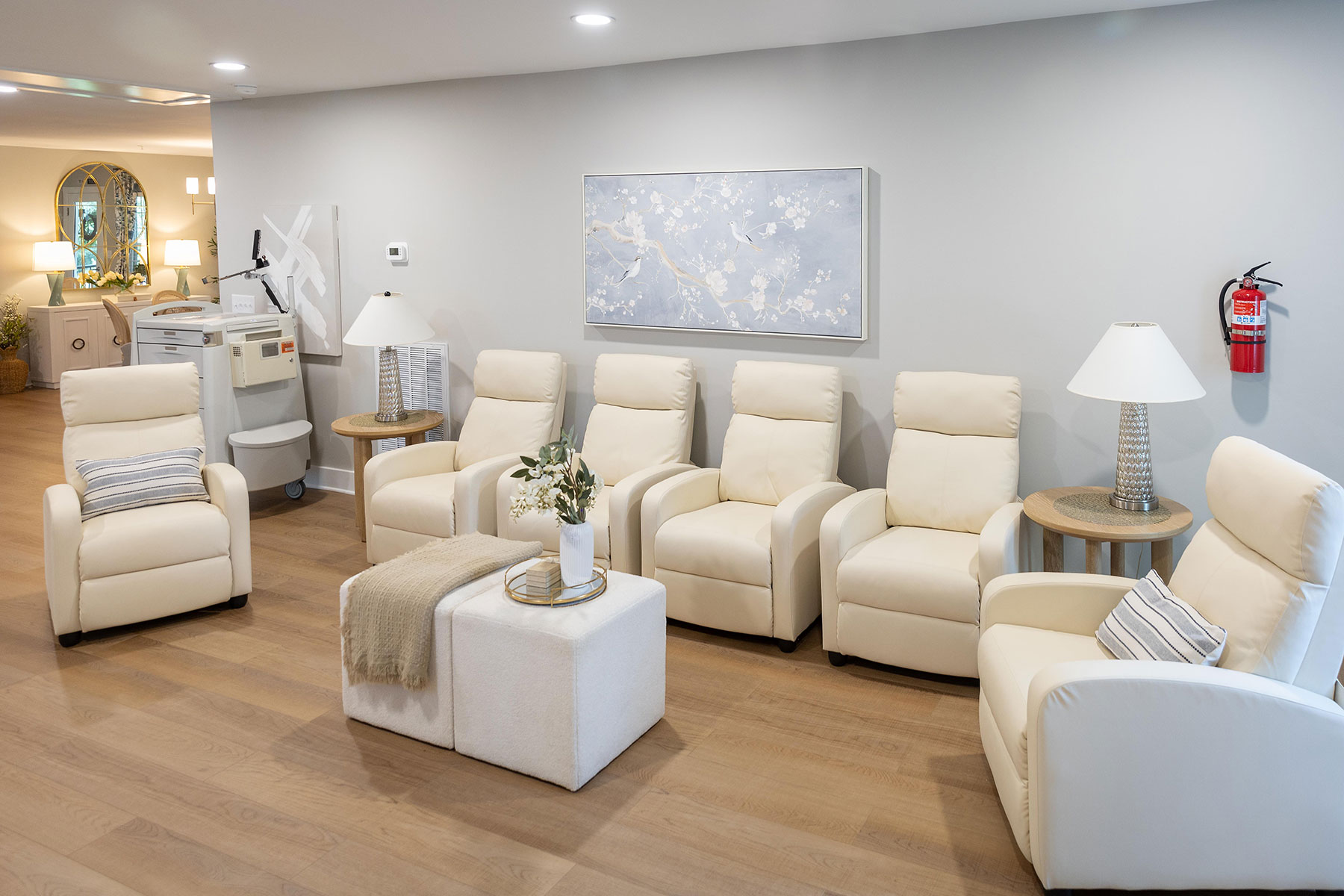
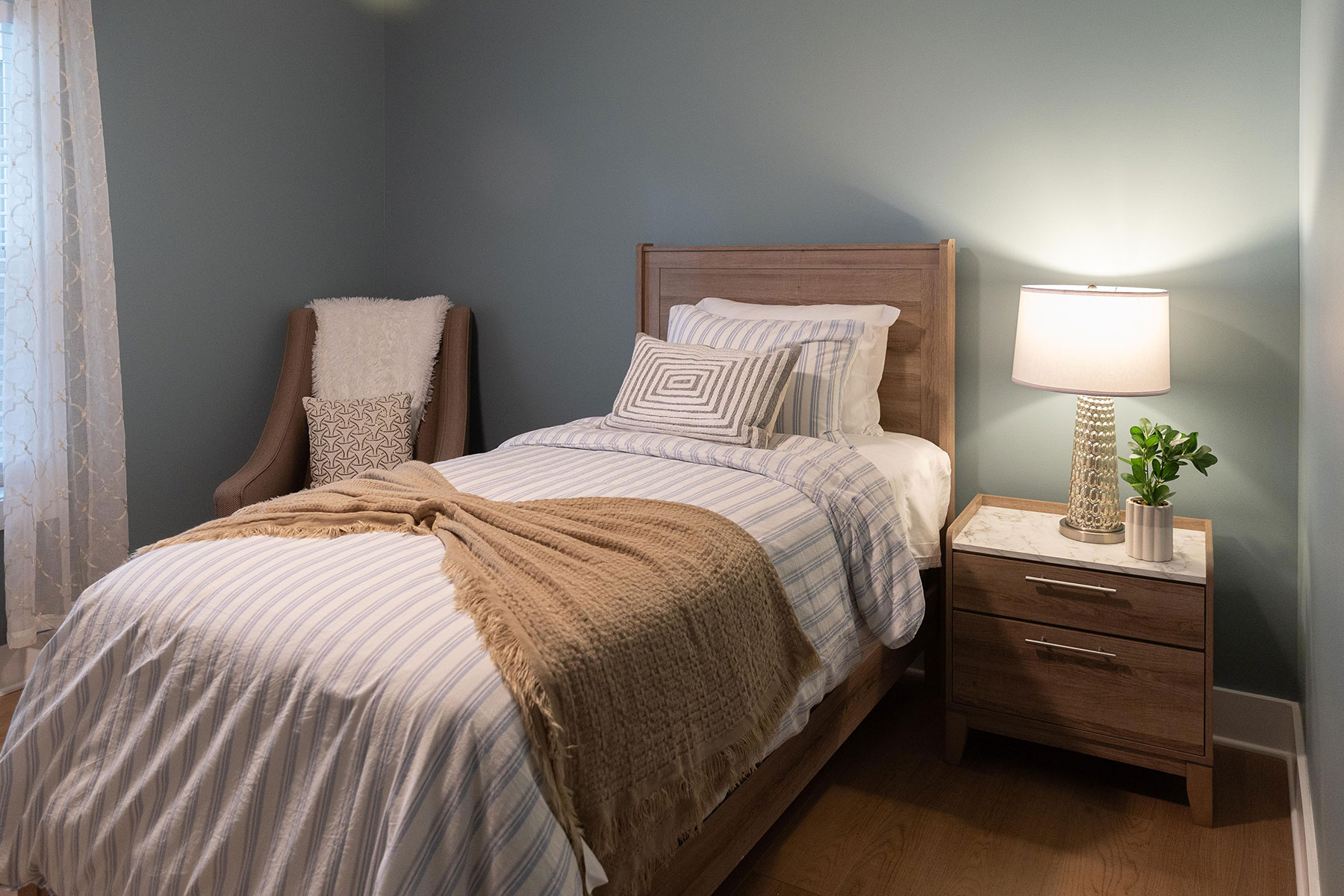
Picardy Point is home to just six residents and is furnished for real life with thoughtful touches and bright shared spaces.
Part of what made the diagnosis so slow, she says, is a phenomenon caregivers rarely hear named out loud. Her father would sail through cognitive tests at the doctor’s office while at home he was a different man entirely. Nurses would tell her how sweet he was. “Great,” she says she’d think. “I’m glad you saw my true dad.” The gap caused by masking is something Melissa now wants families to know to expect, so they walk into those appointments prepared to insist that the 15-minute test in a quiet office isn’t capturing what’s happening at 9 p.m. in their own kitchen.
A nursing home rejected her father two days before he was supposed to move in, after reviewing his hospital notes and flagging his wandering and agitation. Melissa had already done every bit of the research, packed hope into it that then had nowhere to go. That’s what sent her looking again, and what eventually led her to Esther Cromwell, the founder of the Avendelle model, who told her flatly that the traditional facilities weren’t working, instead of insisting they were doing their best.
“It was a breath of fresh air,” Melissa says about having her feelings validated.
Her father moved into a six-bedroom Avendelle home in Apex, where the ratio ran one caregiver to three residents by day and one to six overnight. It was small enough that someone always knew him, not just his chart. One caregiver showed up days early before her father even came home from the hospital and didn’t leave his side until the family was comfortable. He was the one who took her father golfing in a cart, sending Melissa a video from a day she’d stepped away. Her father hitting the ball made him look, for a few minutes, entirely himself. “I never thought I would see this again,” she remembers thinking, in tears.
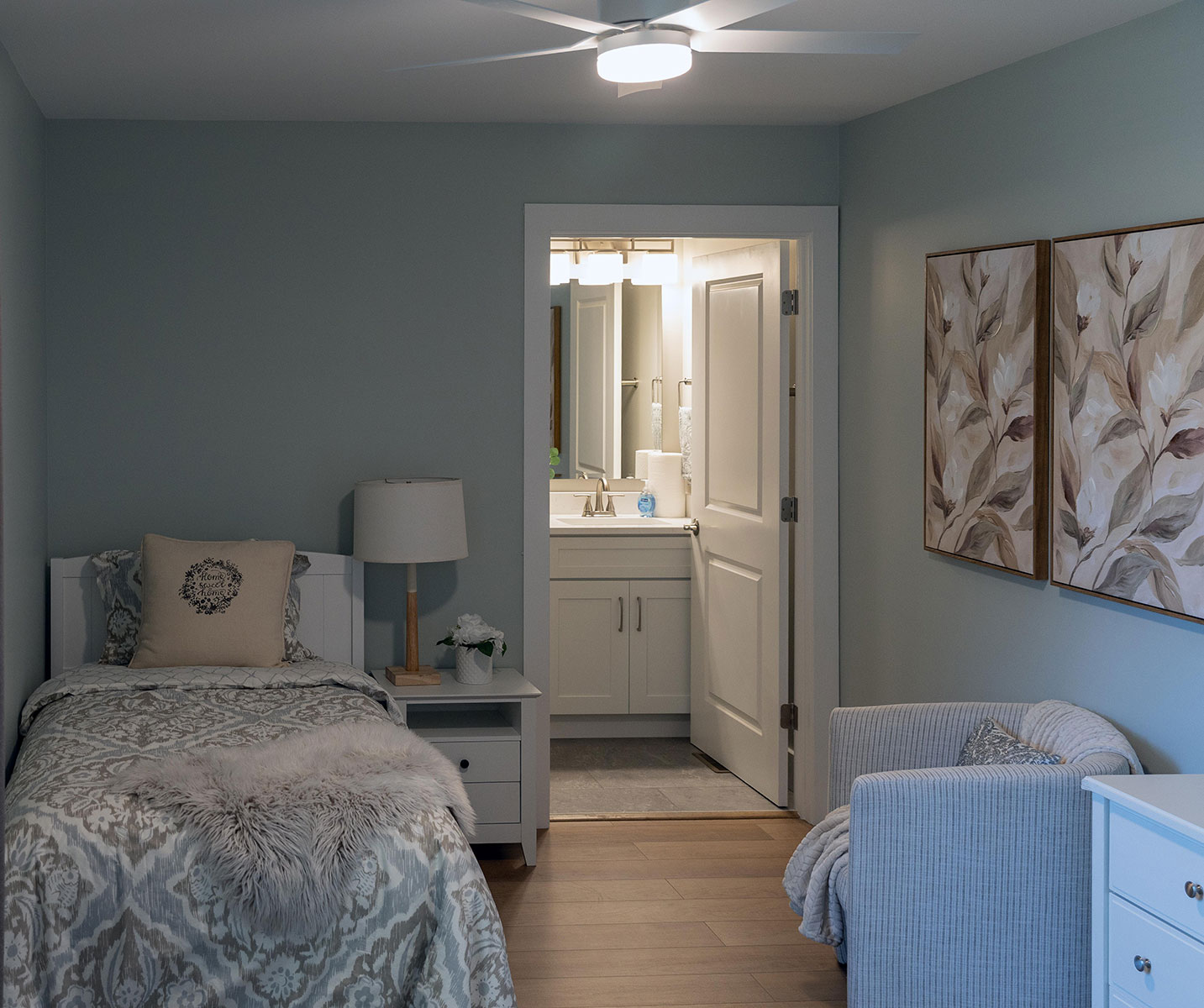
The care team at Picardy Point provides specialized dementia and assisted-living care around the clock, so residents and their families can rest easy.
Toward the end, her father’s needs outgrew even Avendelle’s setting, and he needed one-on-one attention Melissa describes as constant. The family brought him home, supported almost around the clock by CareYaya, a platform that connects families with local medical students for caregiving shifts. Over the course of her father’s care, Melissa estimates 40 to 50 different CareYaya caregivers came through their home. He passed away in November 2025, cared for at home, surrounded by the people who had shown up for him.
Every design choice at Avendelle at Picardy Point traces back to something Melissa wishes she’d had. No hallways, so residents like her father have fewer places to get lost. An open floor plan, so caregivers can see the whole house at once. A sidewalk out front built for pushing a wheelchair, because her father wanted to go outside constantly and getting him into a car had become impossible. A playground within walking distance, because visiting a parent in a facility with young kids in tow is its own kind of hard.
Even the backyard has become an exercise in the community stepping up around her, Melissa has discovered. A local garden center has donated flowers; another is discussing a donated backyard makeover; a local photographer is gifting videography of the house at no cost. Melissa tears up not because she expected help, but because she didn’t.
But she isn’t just building a house. She’s building an answer to the question that haunted her the entire time: Why did no one tell me this existed? Alongside Avendelle, she’s launching a community education series called 1 Topic, 3 Experts, pairing one aging-related subject — dementia, paying for care, aging in place, veterans’ benefits, caregiver burnout, hospice, fall prevention, and more — with three professionals from different specialties, each answering the same handful of questions: What’s the biggest misconception families have? When should planning start? What’s one resource families often don’t know about?
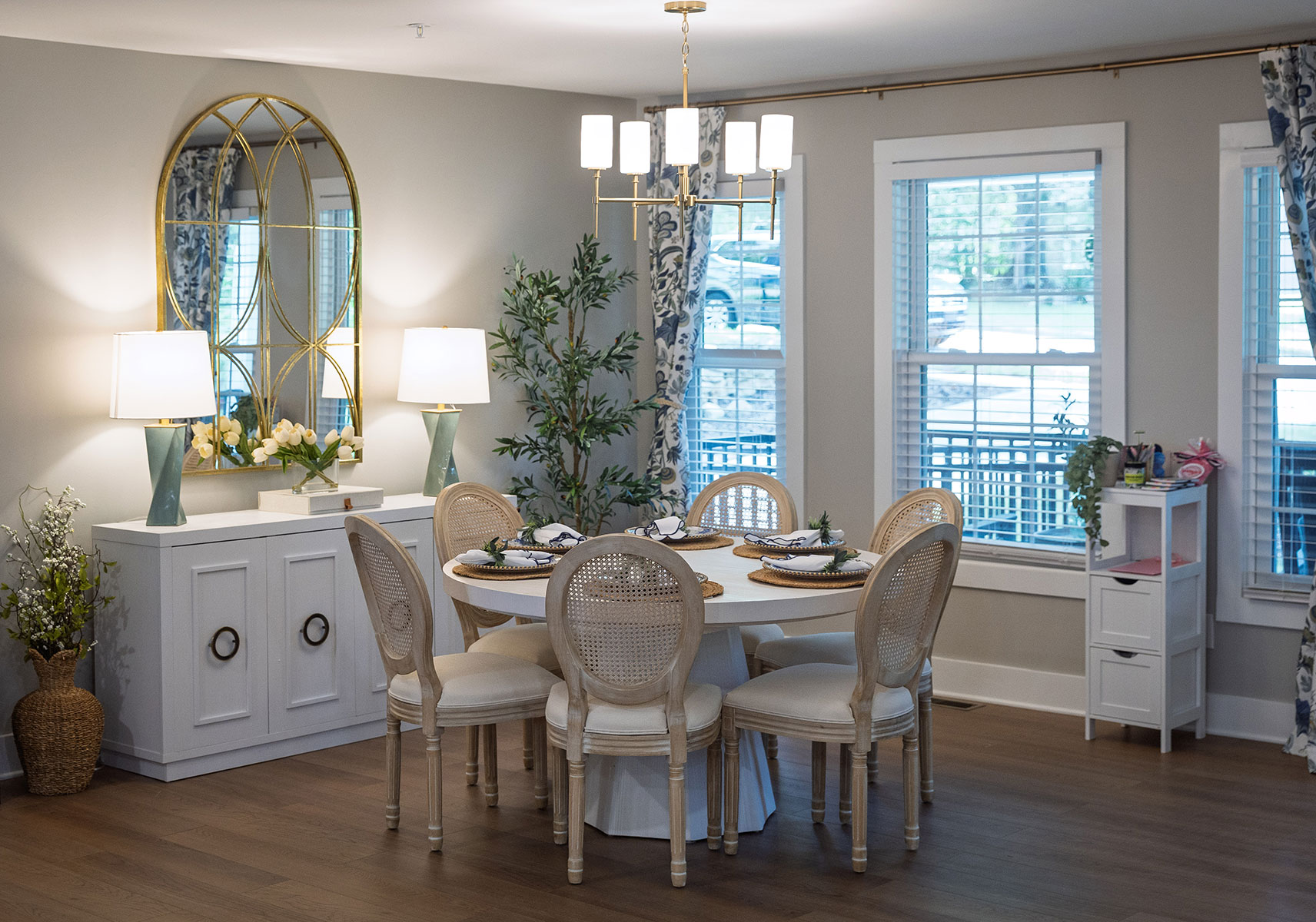
Picardy Point is a real home on a real Cary street. Warm gathering places make even a shared meal a calm, meaningful experience.
The answers will be distilled into a single infographic, with optional short introductory videos experts can record and share themselves, so a caregiver with five minutes between a work meeting and a doctor’s appointment can actually use the information instead of being handed a 30-minute podcast to watch in their nonexistent off time.
Melissa’s also thinking beyond the infographic. Estate planning, hearing loss and its surprising link to cognitive decline, how to actually talk to aging parents about moving, what to do when doctors disagree — all of it, she says, needs to be broken into pieces small enough for an exhausted caregiver to absorb between other things. And she wants at least one piece of it to simply say to families that they’re doing a good job. Caregivers get none of the encouragement that flows toward new parents, she points out, even though the emotional weight is just as heavy.
“We take it day by day,” Melissa says, echoing something her mother repeated throughout her father’s illness. “We’re doing the best that we can.” Hearing “You’re doing a good job” would have made all the difference.
Melissa is candid that staffing a residential care home has surprised her more than almost anything else about opening Avendelle. She interviewed 17 candidates for caregiving roles, and more than half never showed up. It’s a small window into why the industry struggles to retain the kind of caregivers families like hers depended on, and why she’s determined to pay as well as she can.
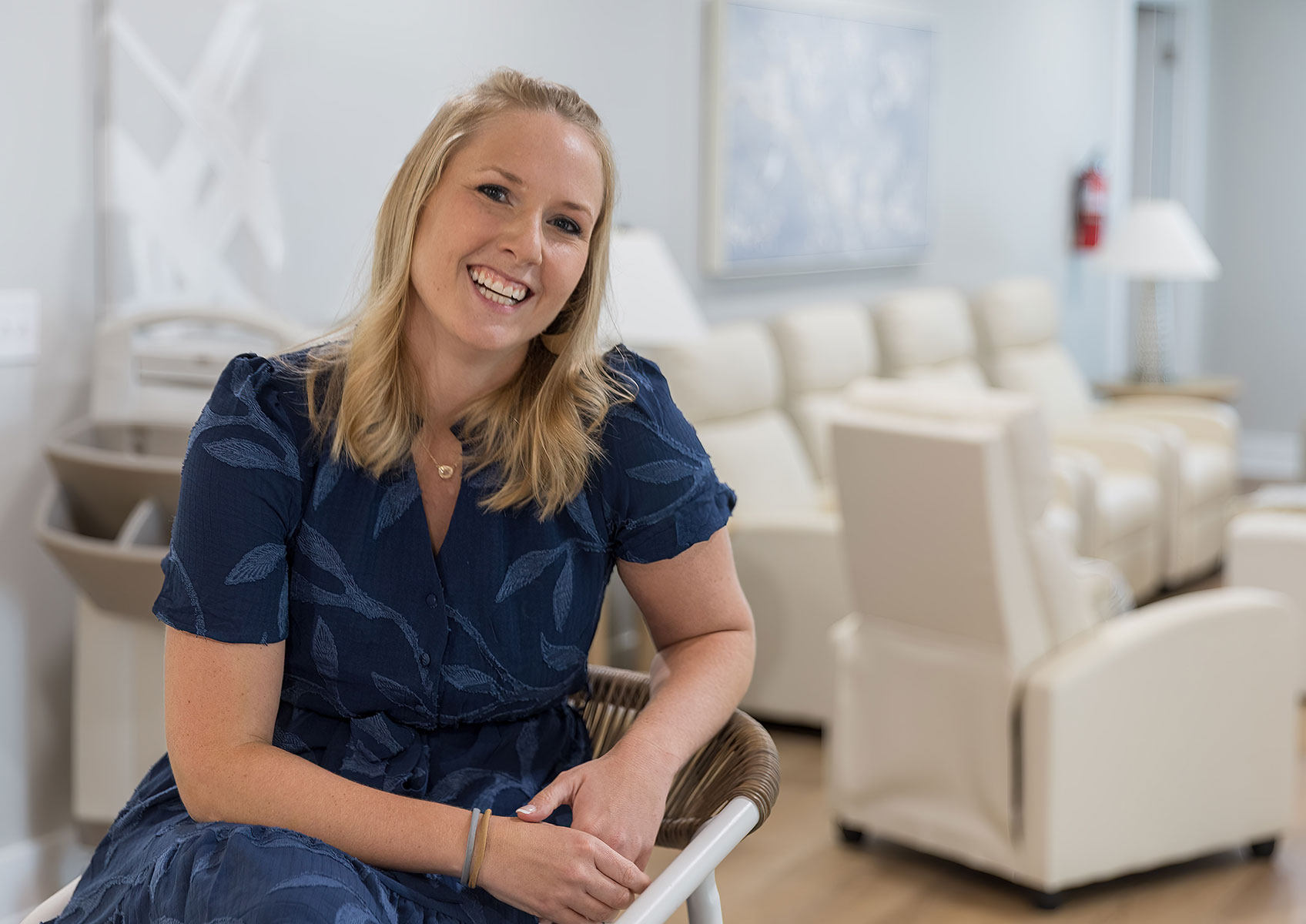
Picardy Point is a real home on a real Cary street. Warm gathering places make even a shared meal a calm, meaningful experience.
Melissa wants Avendelle’s opening to be the beginning of that visibility, not the entirety of it. A house with a sidewalk and no hallways, and a slower, steadier promise underneath it that the next family to search a street behind their own neighborhood won’t have to stalk a house to find help.
Families interested in touring Avendelle at Picardy Point, contributing as an expert to the 1 Topic, 3 Experts series, or learning more about upcoming caregiver education events can reach out to Melissa at avendelle.com or on the Avendelle at Picardy Point Facebook page.