




In the dying light of an early spring day last year, I was giving stubborn weeds in my garden their long-overdue last rites with a sling blade when something out of the corner of my eye froze me in my tracks.
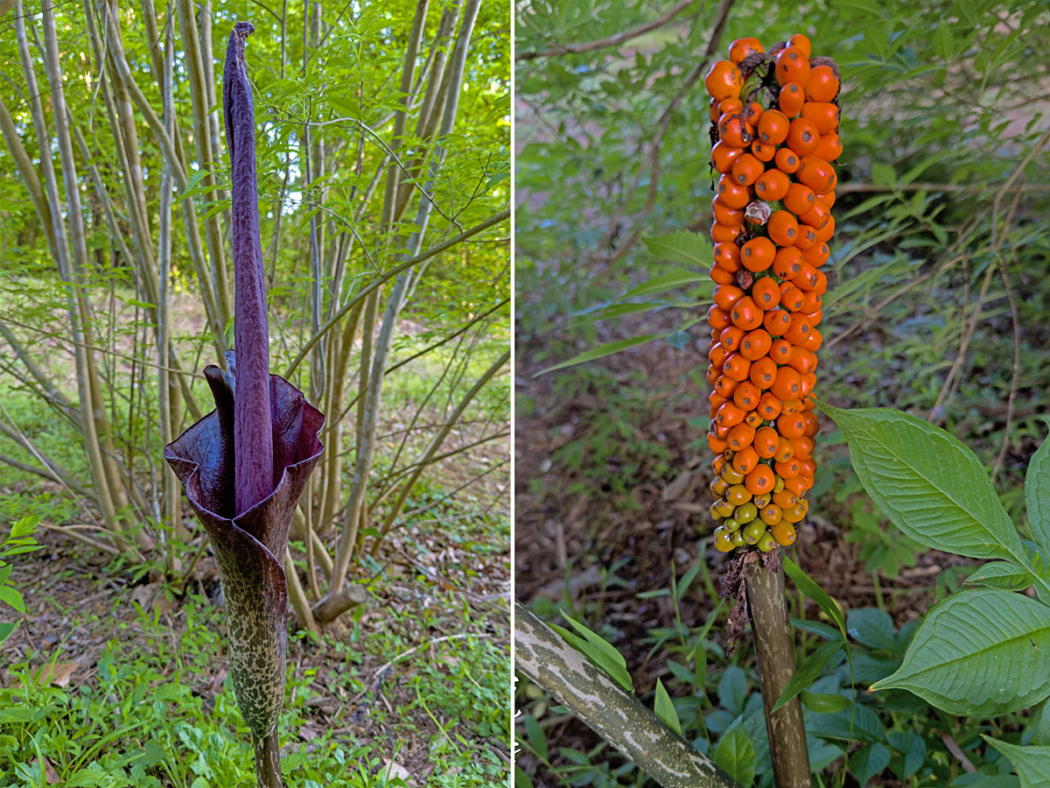
There, below a vitex tree with bare limbs that reached out like bony fingers, was a slim, dark purple specter, beckoning. … In an instant, voodoo had me in its spell — well, not the spooky kind of voodoo, but rather a voodoo lily (Amorphophallus konjac) that I planted two years ago.
A member of the Arum family, the voodoo lily is definitely a strange thing, meaning if you want a perennial in your garden that will conjure up a conversation, it has the eye-catching mojo to do so.
Grown from corms (which aren’t hard to find for sale), voodoo lilies are hardy in our area, but they are best planted in the warmth of mid-spring. Since strong summer sun can scald the leaves, pick an area that receives morning sun only or is in dappled shade throughout the day. The chubby corms should be planted about 6 inches into the ground.
Voodoo lily grows best in well-draining, organically enriched soil. Even in such prime growing ground, this plant wants more. It is a heavy feeder, so add a monthly dose of diluted liquid fertilizer high in phosphorus during the growing season.
After planting, a young voodoo lily might only sprout pleasing fans of green foliage on speckled stems for a few years, but when it matures, the bizarre begins. From seemingly out of nowhere, a curling leaflike spathe will arise in the spring, embracing a dusky purple spadix that can top out at about 4 to 5 feet.
Word on the street is it can stink to high heaven to attract pollinating flies and midges. While I am sure it does, I can’t confirm because I don’t make a habit of sticking my nose in places it doesn’t want to go.
This otherworldly flower will last about a week and then wither away, making room for another round of long-lasting foliage fans. But if pollination is successful, a single stalk will also rise to support a vertical cluster of bright orange berries containing seeds.
As autumn moves in, the entire plant will shrivel back to the earth, leaving nothing but the promise of another round of visual voodoo in the garden next spring!
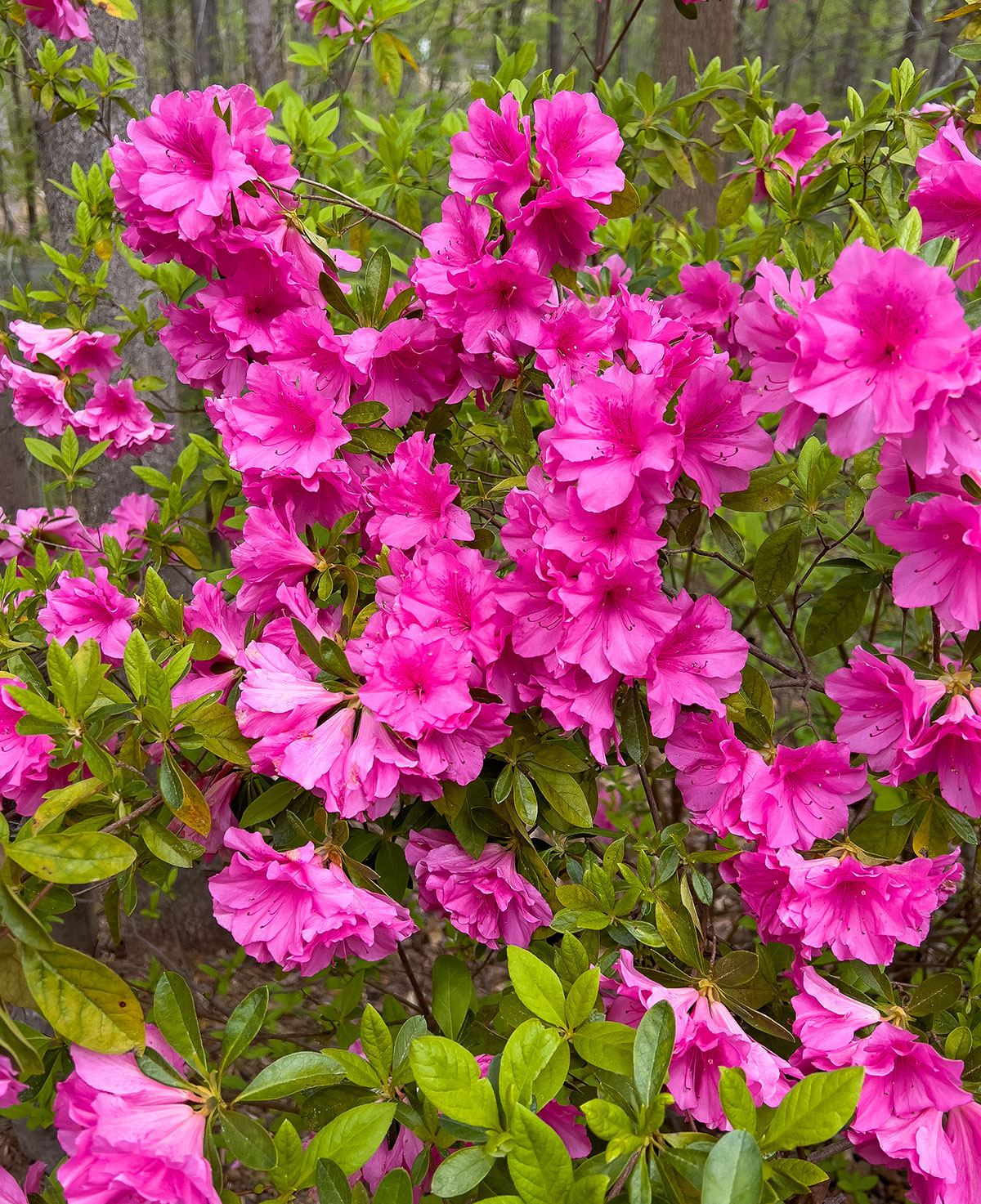
Azaleas looking lanky? Prune them after their springtime flower show fades.
Besides spooky voodoo lilies rising up in the springtime landscape, there are, of course, more conventional flowering pretties for your viewing pleasure at this time of year, especially early blooming woody ornamentals such as fringe trees, ornamental cherries, mock oranges, deutzias, forsythias, camellias (Camellia japonica), azaleas, witch hazels, flowering quinces, and dogwoods.
Do enjoy these woodies in their full flowering flaunts, but when the blossoms begin to fade, it is prime pruning time if any have stretched beyond their allotted garden space. Leave the hedge trimmer in the shed and prune the right way by using hand pruners or loppers to individually cut any overreaching branches back to a bud node or limb junction in the interior of the tree or shrub.
To Do in the Garden
March
- Even with spring temperatures warming up, there is still time this month to plant such cool-season veggie favorites as turnips, radishes, spinach, Irish potatoes, onions, mustard greens, kale, leeks, lettuce, Swiss chard, cauliflower, collards, broccoli, cabbage, carrots, and Brussels sprouts.
- The foliage of spring-flowering bulbs should be allowed to die back naturally so the green leaves can continue photosynthesizing (say that three times fast) sunlight into energy, which will be stored in the bulbs to recharge them for next spring’s bloom-fest.
April
- Prepare the soil in your veggie patch at the beginning of this month, but hold off adding mulch until May so the strengthening springtime sun can heat up the growing ground to make it comfy for such warm-season edibles as lima beans, cucumbers, peppers, watermelons, tomatoes, green beans, eggplant, squash, and pumpkins — all of which you can start planting by the middle of April if your green thumb has a serious itch that needs to be scratched early.
- Cool-season veggies such as carrots, collard greens, radishes, spinach, parsnips, and lettuce that were started from seed in the garden last month should now be thinned to their proper spacing requirements.
- Out & About in Wake County: March/April 2026
- Find Your Next Favorite Trail with Wander
- Pay It Forward: United Arts Wake County
- Small Business Spotlight: TrenLend
- 2026 Maggy Awards
- 2026 Maggy Awards: Restaurants
- 2026 Maggy Awards: Lifestyle
- 2026 Maggy Awards: Services
- 2026 Maggy Awards: Shopping
- Game On!
- Garden Adventurer: Voodoo Gardening
- Foxcroft Food & Wine
- Celebrated Spirits: Alpine Highball
- Recipes from Readers: Apple Cinnamon Crumb Cake