




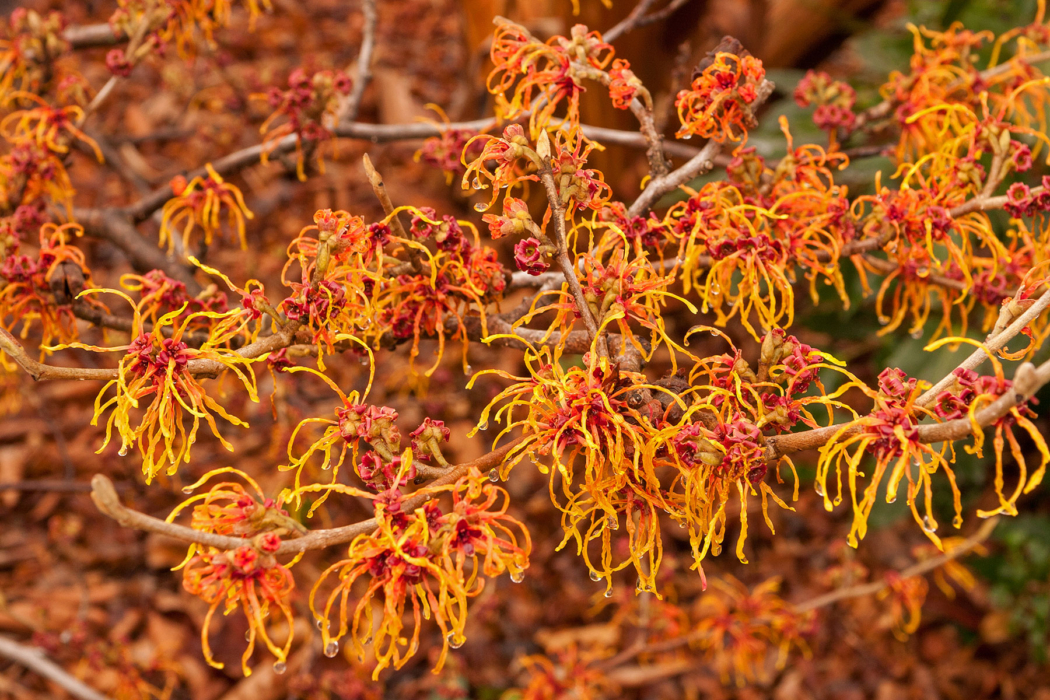
When winter has area gardens in its chilled grip, it is tough to imagine the glory that will be the coming spring. So why not summon a witch to help cheat the consuming cold and create comforting thoughts that, yes, a new, balmy growing season is on the way?
That’s right, I said a witch.
Well, not a real witch, but rather witch hazel — a patient plant that waits for the chilliest times of the year to put on a delightfully unexpected show of floppy, ribbon-like flowers with the added bonus of being fragrant, which is a big plus in any winter garden.
There are native witch hazels, with American witch hazel (Hamamelis virginiana) being commonly found in the wilds of our region. Its yellow flowers typically begin their bloom-fest in the fall and can extend into the winter. While the straight species is an option for home landscapes, plant breeders have been busy conjuring up better witches, including the compact, 5-foot-tall ‘Little Suzie’ and the variegated ‘Green Thumb.’
Breeding wizards have also had success combining the desirable attributes of Chinese witch hazel (H. mollis), a small tree (15 to 18 feet tall) flaunting fragrant yellow flower ribbons, with Japanese witch hazel (H. japonica), a dazzler sporting yellow blooms and flashy fall foliage that can range in color from yellow to red to purple. This resulted in Hamamelis x intermedia, which has many popular cultivars that usually begin their flower shows during the winter to provide welcomed ocular and olfactory relief for spring-starved gardeners.
‘Arnold’s Promise’ is perhaps the most popular (meaning easiest to find at garden shops and online) of these hybrid witch hazels. A late bloomer, it flaunts 1 to 1 ½-inch-long stringy, fragrant yellow blooms and rich reddish-orange autumn leaf coloration. Mellow for more yellow? The flowers of ‘Pallida’ show off in a buttery hue, too.
Another commonly found H. x intermedia contender for gardeners’ attention in winter is ‘Jelena,’ sporting dainty and delightfully scented copper-red dangles. Although tinged a tad more in red, the blooms of ‘Diane’ have a similar tantalizing look and sweet smell as well.
Usually topping out at about 10 to 20 feet tall and wide, H. x intermedia cultivars won’t particularly become landscape space hogs. While being tough plants, they perform better in well-drained, slightly acidic soil in sunny to partially shaded locations.
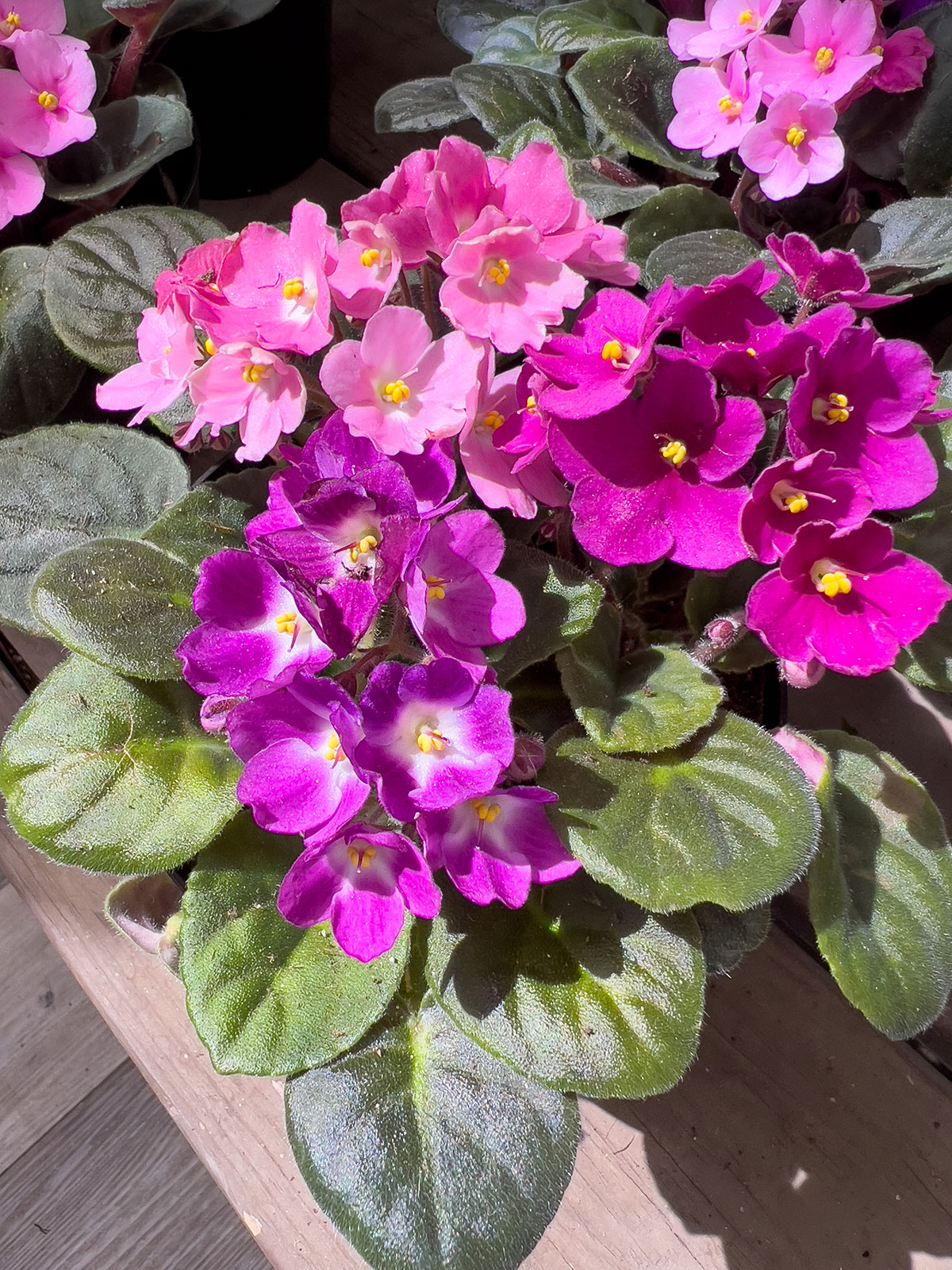
For better bloom displays, water your African violets properly.
African violets need to be watered, of course, but the chlorine typically found in city systems can cause leaf spots. An obvious remedy is to water the dirt, not the foliage. As another preventative, simply leave a bottle of tap water out overnight to allow the chlorine to dissipate. Using rainwater or bottled distilled water is another option. Both, by the way, are equally handy if you happen to have hard (alkaline) tap water, which is also not good for African violets because it can raise the pH of the potting soil these acid-loving pretties call home.
To Do in the Garden
January
- Keep the colors (and memories) of Christmas bright during the sullen gray months of winter by properly watering leftover Yuletide lovelies such as poinsettias, Christmas cacti, and Christmas cherries, meaning only when the upper half-inch of soil in the pots feels dry to the touch.
- Pamper such smooth-leaf houseplants as dracaena, rubber plant, croton, philodendron, and fiddleleaf fig by wiping the leaves with a soft, moist cloth every few weeks. And while cleaning your pretties, also look for signs of bad bug activity, with common culprits being whiteflies, mealy bugs, and spider mites.
February
- If your green thumb is itching to start the veggie patch, give it a good scratch around the middle of this month by planting such cool-season edibles as mustard greens, onions (bulbs), Irish potatoes, vining peas, kale, lettuce, cabbage, broccoli, collards, asparagus, or cauliflower.
- Did rampant vines try to eat your landscape last year? If so, now is a good time to tame them before excessive foliage, pesky bugs, and rising temperatures make this less a chore and more a misery. Feel free to whack back such nuisance crawlers and climbers as Japanese honeysuckle, wisteria, kudzu, Virginia creeper, poison ivy (don’t forget to wear gloves), bittersweet, and wild grape.

- Mountain Air
- Escape to Edenton
- Recipes from Readers: Harira Moroccan Ramadan Stew
- Legendary Lunches
- Celebrated Spirits: The Ethan 2.0
- Garden Adventurer: Better Witches
- The Call to Disconnect
- Out & About in Wake County: January/February 2026
- Pay It Forward: Raleigh Stroll Club
- Wondrous Whimsy
- Small Business Spotlight: Fleet Feet Raleigh-Morrisville