



Drive along Wake Forest’s E. Holding Avenue on Mondays, Wednesdays, and the second and third Saturday of each month from 10 a.m. to 1 p.m. and you’ll see a snaking line of cars and volunteers in green T-shirts darting between vehicles with practiced efficiency. Although Tri-Area Ministry (TAM) Food Pantry Board Chair Mike Burger jokingly says, “We have borrowed every good idea from Chick-fil-A,” this isn’t a fast-food drive-through — what’s happening here is something far more substantial than a quick meal.
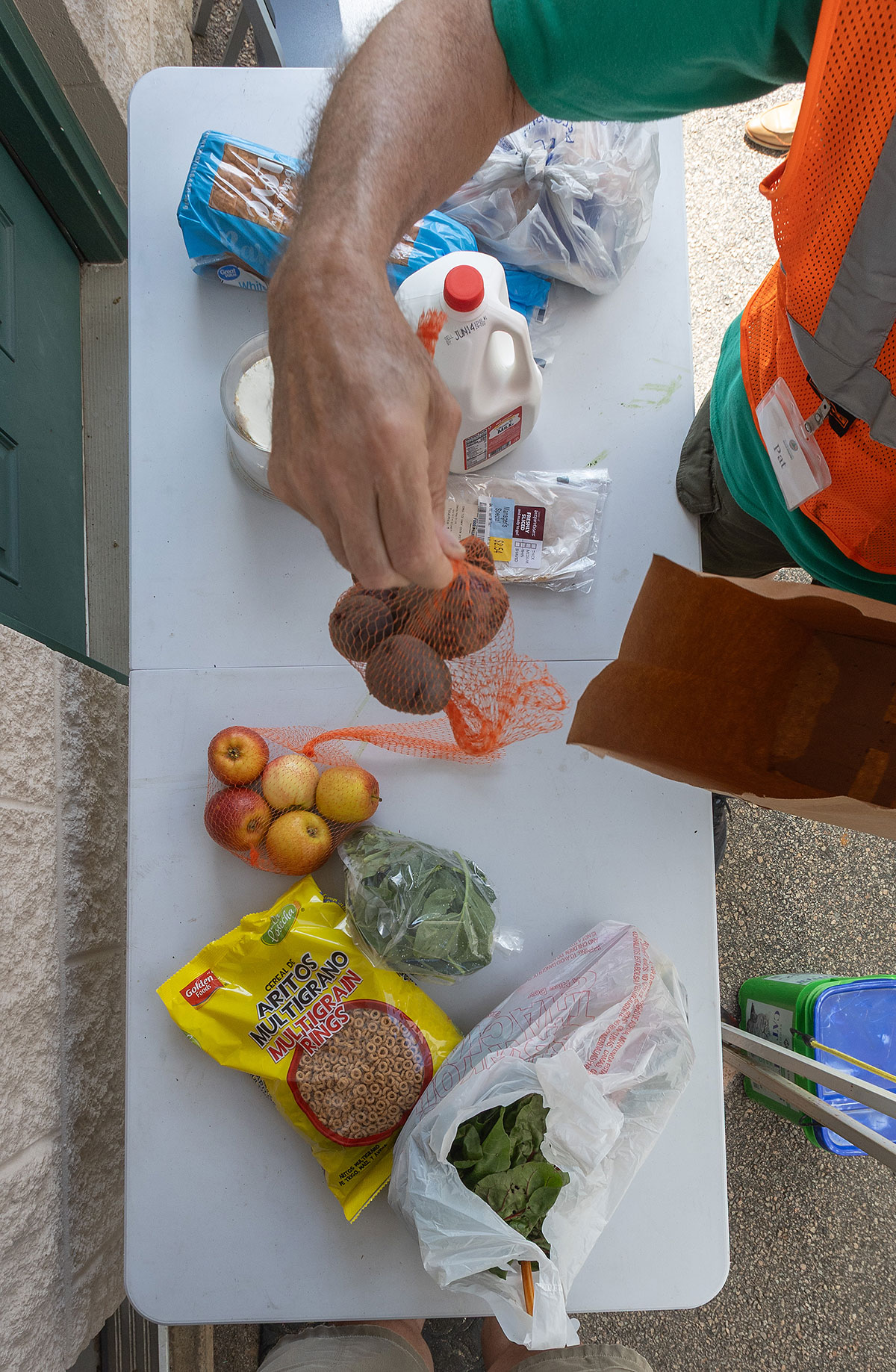
Every family receives almost 100 pounds of thoughtfully curated, wholesome food, no matter when in the month they visit.
On any of the 10 days the pantry opens every month, between 200 and 250 families will pass through. In May, 1,731 families were served. With an average of three and a half people per household, that’s nearly 6,000 individuals who received food, compassion, and dignity — all from a 100% volunteer operation that has quietly anchored the community since 1988.
“I was at the post office shortly after we moved here,” Mike recalls about his introduction to the nondenominational food pantry, “and I saw this nondescript little building and a long line of cars. I’m thinking, What’s going on over there?” After checking it out, Mike started to offer his time … and 11 years later he’s giving the tours.
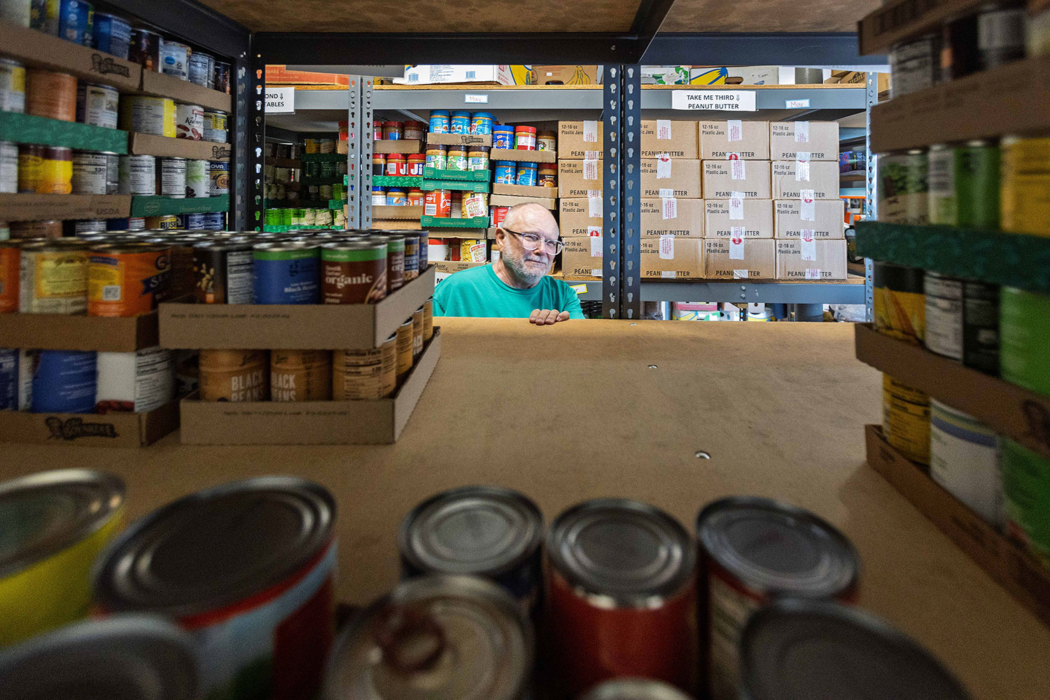
What visitors find inside TAM is an impressive logistics operation. Donations arrive and are immediately date-checked and sorted into categories. Supermarket partners — three Harris Teeters, two Lowes Foods, a Food Lion, and others — donate food that has aged out of their inventory but is still perfectly usable. Two vans run pickup routes. A pig farmer collects whatever can’t go to families. Almost nothing ends up in the landfill.
Each family that comes through leaves with a gallon of milk, a half-dozen eggs, a loaf of bread, five pounds of meat, one leafy green, two types of fresh vegetables, two types of fresh fruit, and bags of nonperishables that include canned goods, rice, beans, pasta, peanut butter, and more. Hygiene products, diapers, pet food, and even Milk-Bones for dogs round out the offerings. On the day Wake Living visited, the Wake Forest Garden Club was on hand with container garden kits — tomatoes, peppers, marigolds (for pest control), lettuce, soil, and instructions — so families could begin to grow their own produce.
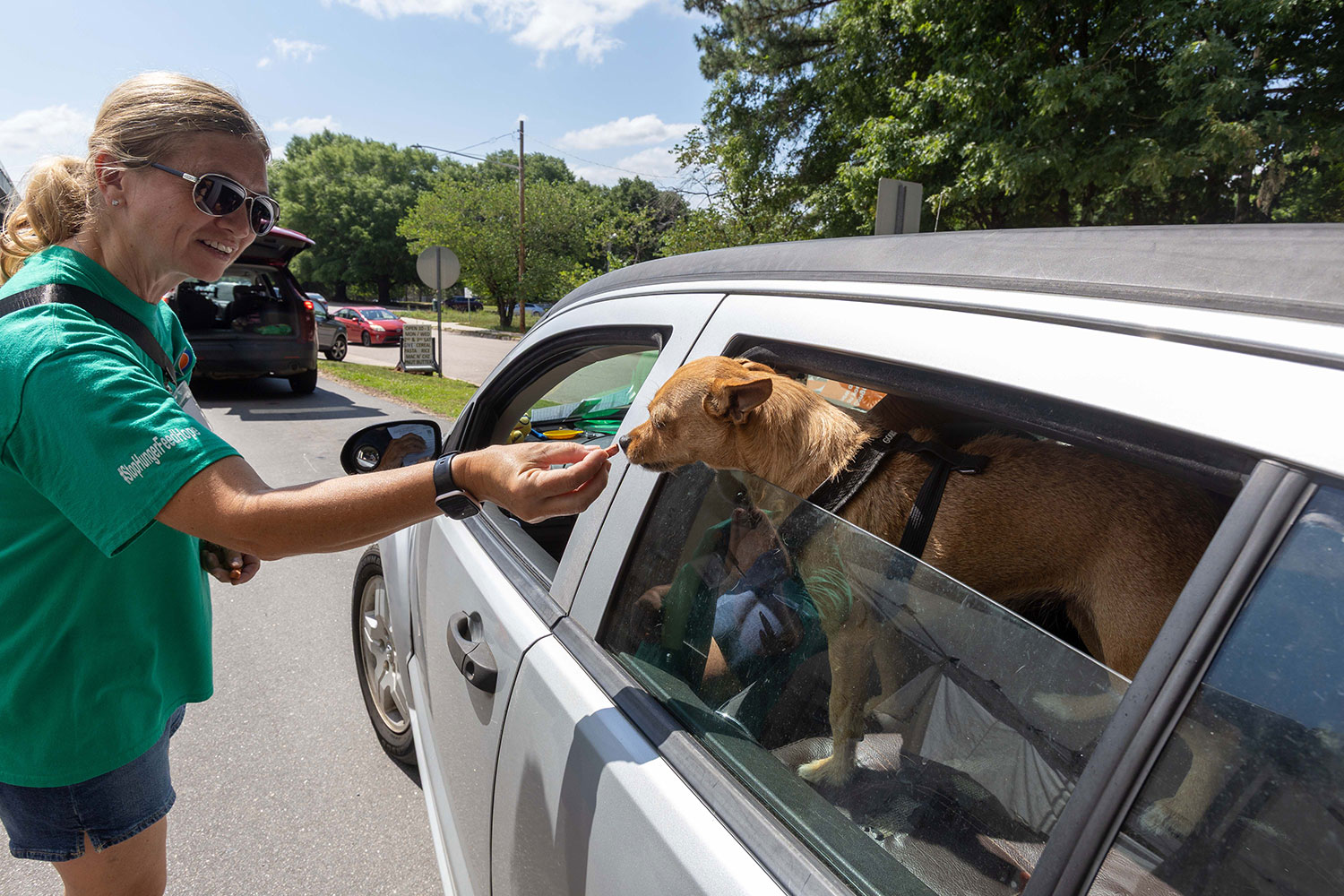
A passenger pet accepts a treat from Amanda Quigley.
“In total, it’s about 100 pounds of food,” Mike says about the five bags of food every family can receive once a month. “And it’s even loaded into the car.”
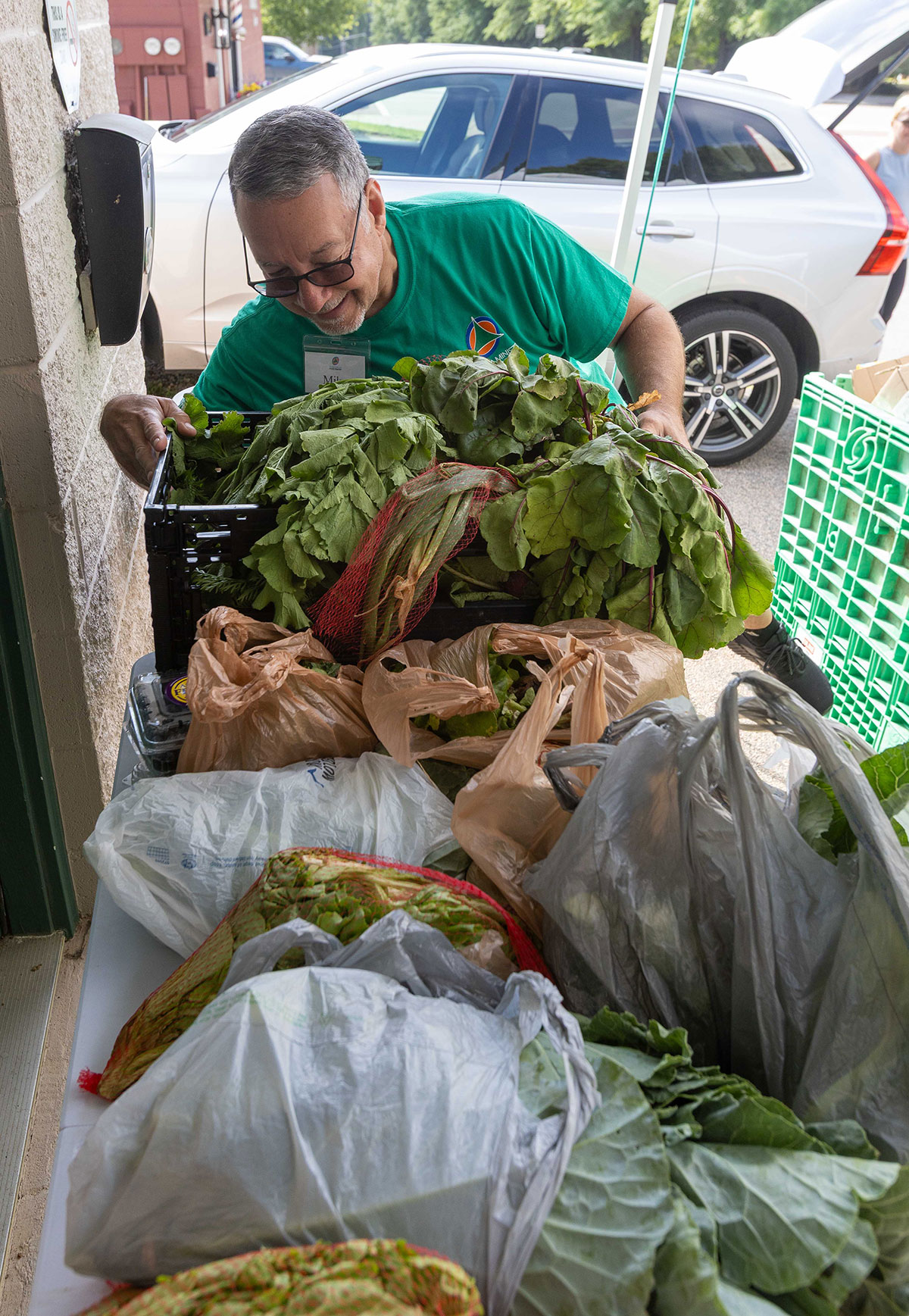
Board chair Michael Burger accepts a donation of fresh produce from a backyard garden.
It would be easy to make assumptions about who pulls through the TAM line, but the data reveals that the vast majority, 75%, are working and just not earning enough to make ends meet. The pantry’s demographic picture is a cross-section of the community: Approximately 30% of recipients are African American, 25% are Hispanic, 25% are Caucasian, and the remainder is a mix of backgrounds. The numbers of men and women are roughly equal. Approximately 18% are children under 17, and a similar portion are senior citizens over 65. Interestingly, only about 35% of families come every single month. The average is six visits per year, suggesting that for many the pantry is a safety net used strategically and not a permanent dependency.
Before the pandemic, the pantry served fewer than 600 families a month. Since then, that number has more than tripled and shows no signs of declining. “What we assumed would happen was that it would spike, and then it would gradually go back down,” Mike says. “But we haven’t had a dip at all. It tends to grow between 10% and 12% year over year.”
Inflation, he says, is a major driver. When the grocery bill climbs but the paycheck doesn’t, something has to give. “At the end of the month, you just don’t have enough to eat. So you’re going to come here.” And when families do come to TAM, they aren’t asked for ID or a referral. It doesn’t matter where they live or what their income is. As Mike explains: “If you’re hungry, you come. We’ll provide food.”
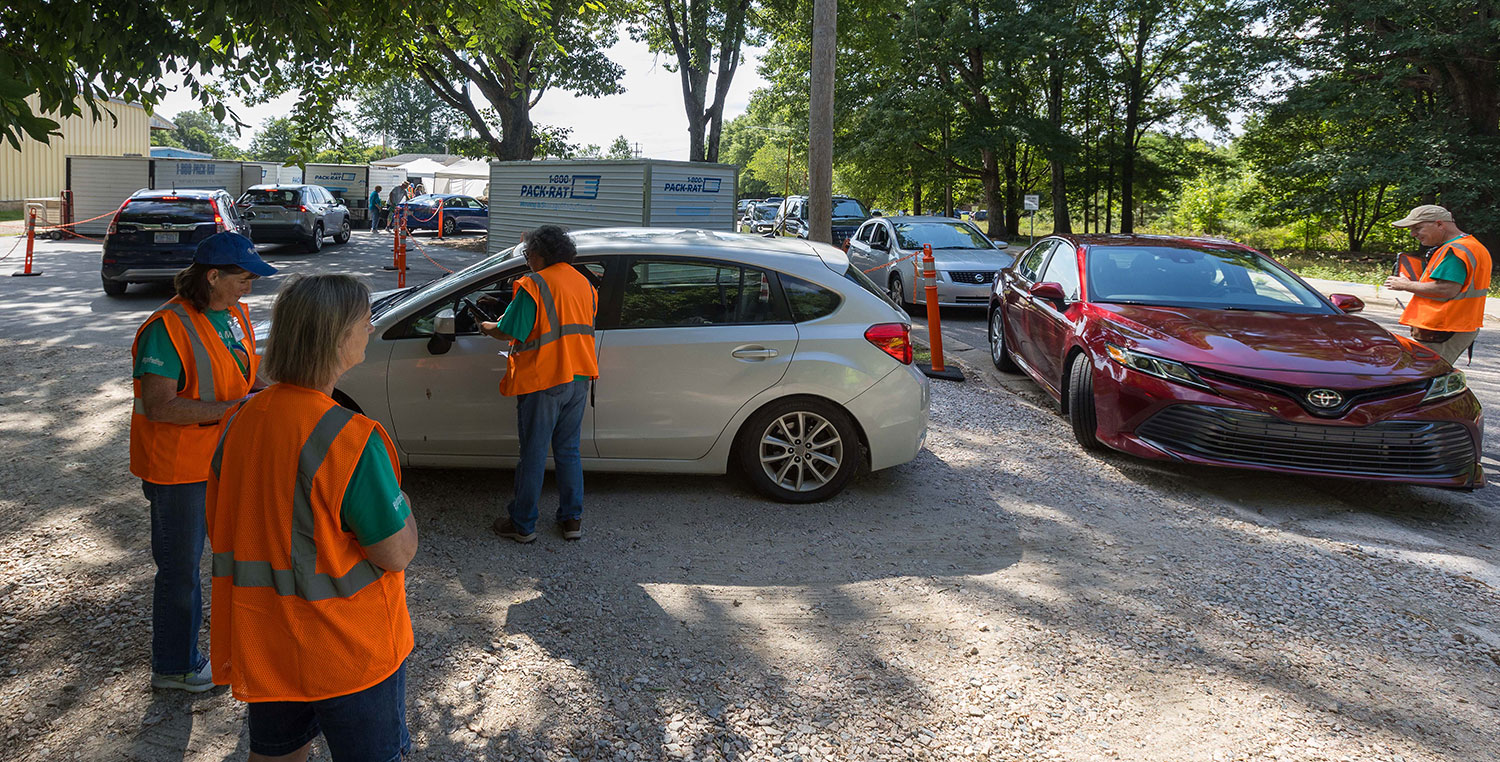
Cars line up as volunteers check them in.
Behind every statistic is a face, and Mike carries several of them with him. He recalls how during the recent government shutdown a TSA agent came through, in uniform. It had been a month since he’d gotten paid. He had a family to feed and was the sole breadwinner. “I thought to myself, That could be me,” Mike shares, aware that most people aren’t more than a few months from having to wonder how they’re going to put food on the table.
There was also the young mother who walked in pushing a stroller with two young children. She’d never visited a food pantry before and was visibly struggling with being there. Volunteers quietly helped her through the process, but when they asked her about diapers, she initially declined, suggesting that they should be left for someone who needed them more.
When the team stepped away and returned, the young woman was in tears. “Is it too late for me to change my mind?” she asked. “I really need those diapers.” Her husband had been injured and couldn’t work. She didn’t know where else to turn. So, she loaded up her kids and walked over 2 miles to the pantry, where Mike considers it “a blessing” that he and the other volunteers can help families in need.
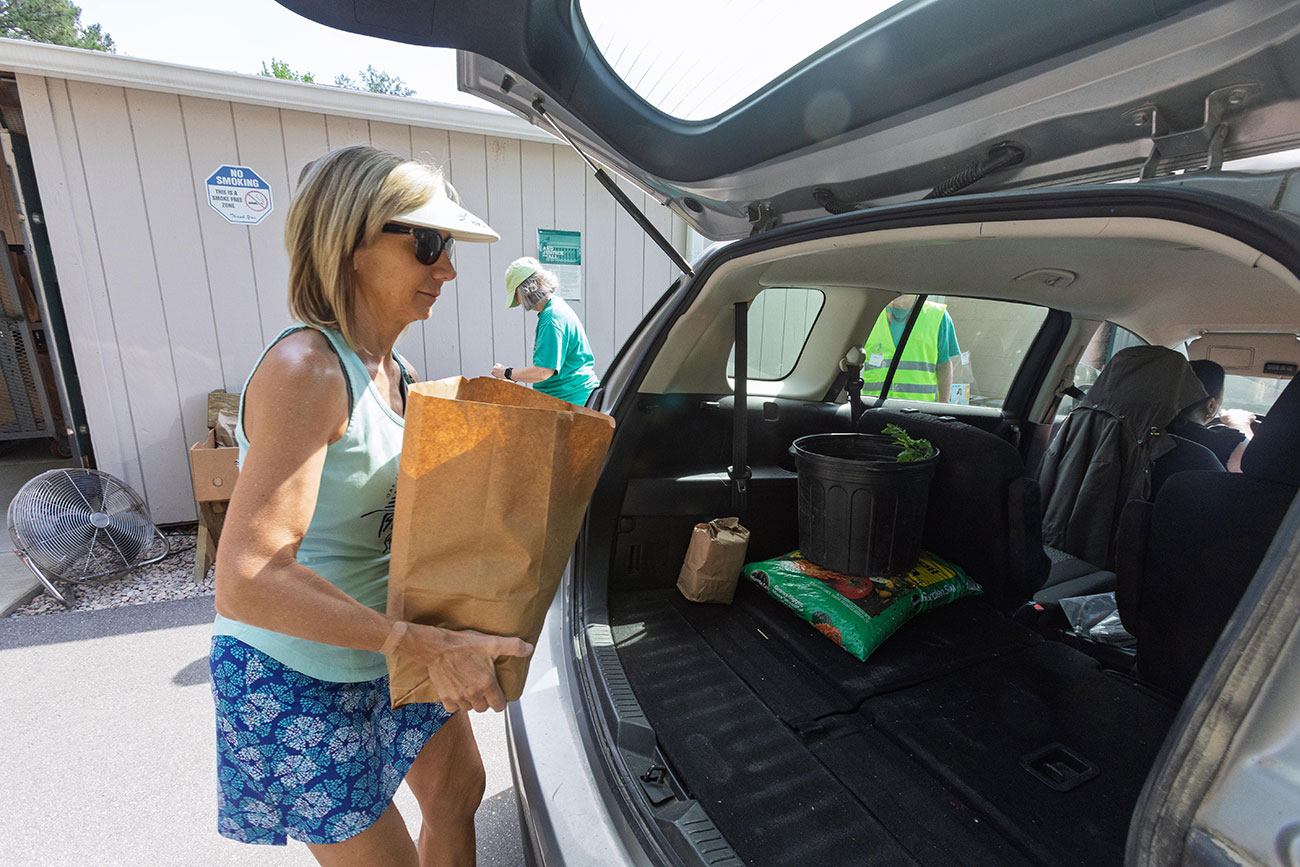
Volunteer Shelly Kramer loads groceries in the back of a client’s vehicle.
Volunteer hours, food donations, financial contributions, and advocacy are all included when Mike says, “We enjoy an enormous amount of community support.” Approximately one-third of food comes from the regional food bank, one-third from community donors, and one-third is purchased outright by the pantry using donated funds. That purchasing power — with 100% of resources going into buying food — enables the pantry to guarantee consistency. Every family, every visit, receives the same quality and quantity of food regardless of what has been donated that week.
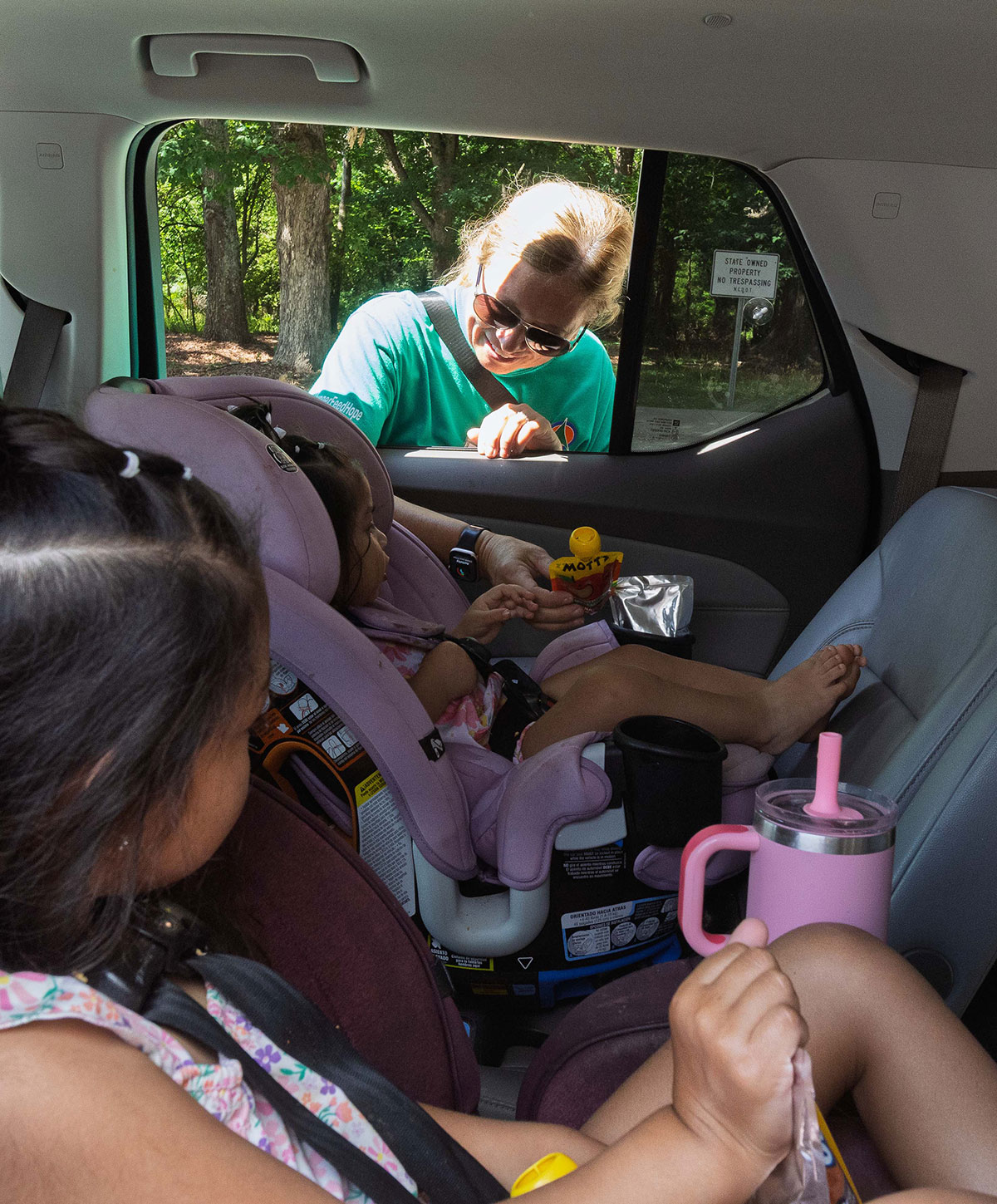
Amanda Quigley provides apple sauce for a couple of girls.
Volunteers are always welcome, and the pantry is fortunate to have nearly 30 people serving during every distribution day. They are the reason the operation works: arriving early to unload trucks, sort donations, pack food, and load vehicles, whether the forecast calls for blazing heat, driving rain, or winter cold. In fact, there has never been a day when there weren’t enough helping hands. An outside bin accepts food or hygiene donations at any time. And if none of those fit your circumstance, Mike simply asks that people pay attention.
“We’re giving people food,” he says. “And we’ll give people food next month, too.” But that doesn’t address the reason they’re hungry in the first place.” So he forces himself to “operate with blinders on … because we can’t boil the ocean. Would it be better if everybody had a job with a living wage so they could afford to buy the food, and then they wouldn’t have to come here? Of course. But we can’t affect that. What we can affect is making sure that those people who are maybe out looking for work or going to school are not doing it with an empty stomach.”
While TAM’s goal is obsolescence and to one day have no reason to exist, Mike knows that until then, the line of cars will keep coming — and Tri-Area Ministry will keep showing up to feed the community, one car at a time.
triareaministry.com
@tamfoodpantry
- Recipes from Readers: Chicken Pot Pie with Veggies
- Celebrated Spirits: 1995 Classic Lager
- Garden Adventurer: Savoring Squash Blossoms
- Mala Pata
- Pressed for a Good Time
- Lucky 13
- Out & About in Wake County: July/August 2026
- Erica Chats: Special Occasion Spots
- Pay It Forward: Tri-Area Ministry Food Pantry
- Small Business Spotlight: The Daily Grind at Great Harvest Bread Company
- Tahini It to Win It